
Build Your Own Mushroom Blend
Organic mushroom powder for dogs and cats
Choose up to 4 organic mushrooms for your dog or cat. We'll help you choose well.
Custom blends from $29.99 for a 1 month supply. Made to order.
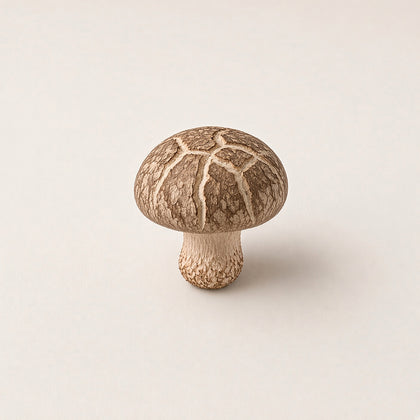
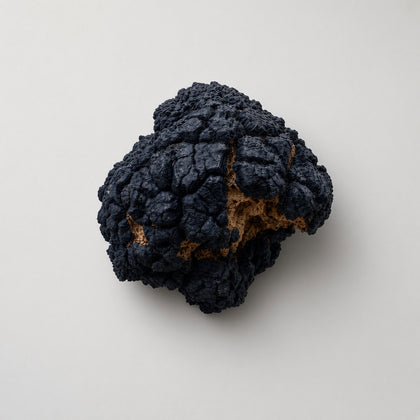
- Available now6 mushrooms
Each one sold as a single today.
- Per blend1 to 4
Our suggestion: start with 1 or 2.
- Studied in dogs2 of 6
Reishi and Shiitake have published dog data.
- Coming soon2 new
Tremella and Poria.
Pick for a purpose, not for a number.
Start from a goal or build from scratch. The panel adds up what your blend supports and flags anything to check with your vet.
02 Start from a combo optional, editable
03 Choose mushrooms
Not available yet. Not selectable.
-
 01
01
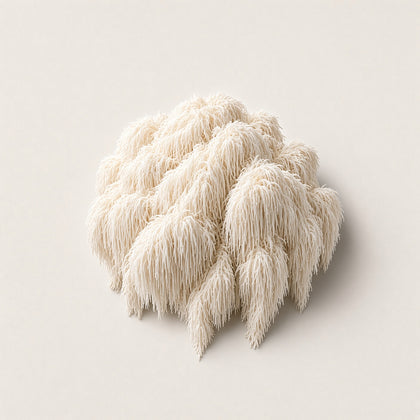
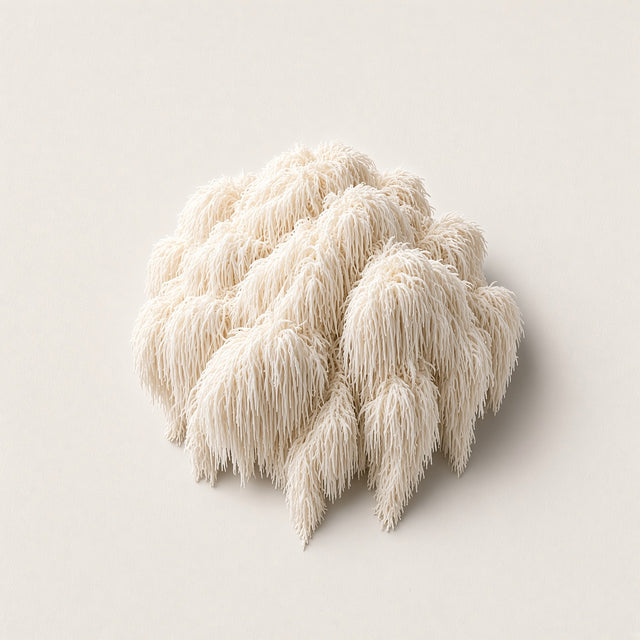
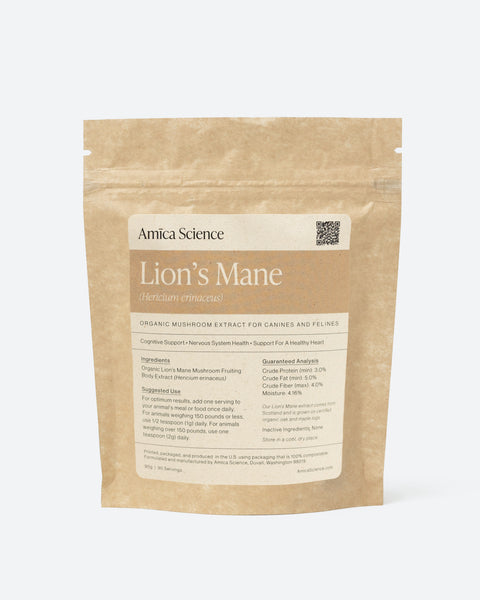
Lion's Mane
Hericium erinaceus / Fruiting body
Human and lab researchThe focus mushroom, for curious minds at every age.
What it supports- Supports normal cognitive function and mental alertness
- Traditionally prized for focus and nerve wellness
For cats: Start with a small pinch and build slowly. Watch appetite and stool for the first week or two.
Evidence and cautions
Evidence, honestlyHuman and laboratory research only. Small human trials have looked at lion's mane and memory, and lab studies have looked at nerve-growth pathways. There are no controlled studies of lion's mane alone in dogs or cats yet.
Cautions CEDRIC CHECK- Safety data in dogs and cats is limited. A 90-day laboratory study in rats found no adverse effects at high intake.
- Stop and call your vet if you see itching, swelling, vomiting or loose stool.
- Not studied in pregnant or nursing animals.
-
 02
02
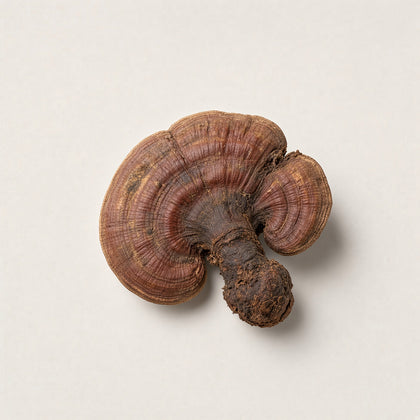
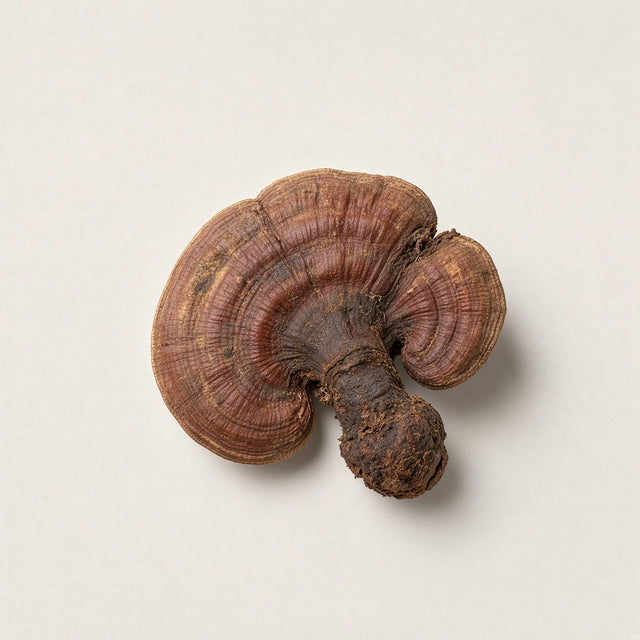
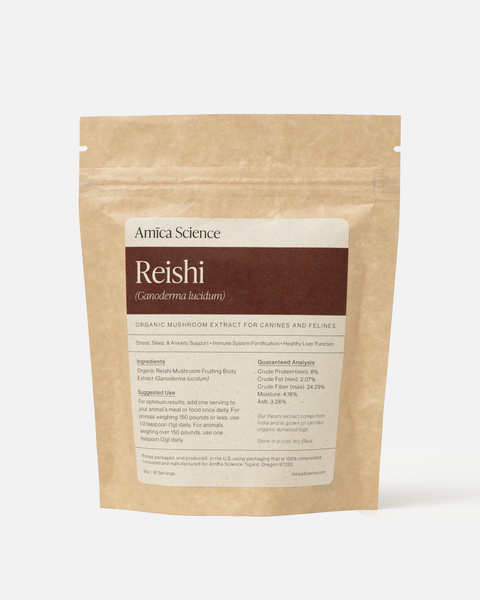
Reishi
Ganoderma lucidum / Fruiting body
Dog data availableOur best-researched mushroom for dogs.
What it supports- Supports a healthy immune response
- Supports daily wellness
For cats: No feline research yet, so start lower and go slower than you would with a dog.
Evidence and cautions
Evidence, honestlyDog data available. A 2024 controlled study in 40 healthy adult Beagles found reishi was well accepted and did not affect digestion. At the highest amount tested, the dogs showed trends toward stronger immune-cell activity and a higher vaccine antibody response. No published feline studies yet.
Cautions CEDRIC CHECK- Blood thinners and bleeding: reishi may increase the risk of bleeding. Check with your vet if your animal takes anticoagulant or antiplatelet medication, has a bleeding or clotting disorder, or has surgery or a dental procedure coming up.
- Immune-suppressing medication: reishi can enhance immune response. Check with your vet if your animal takes immunosuppressive medication or has an autoimmune condition.
- Liver: rare liver reactions have been reported in people. Ask your vet first if your animal has a liver condition.
- Not studied in pregnant or nursing animals.
-
 03
03
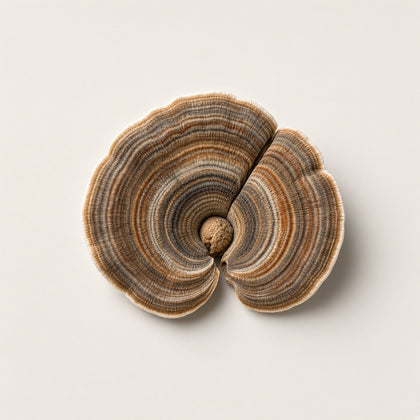
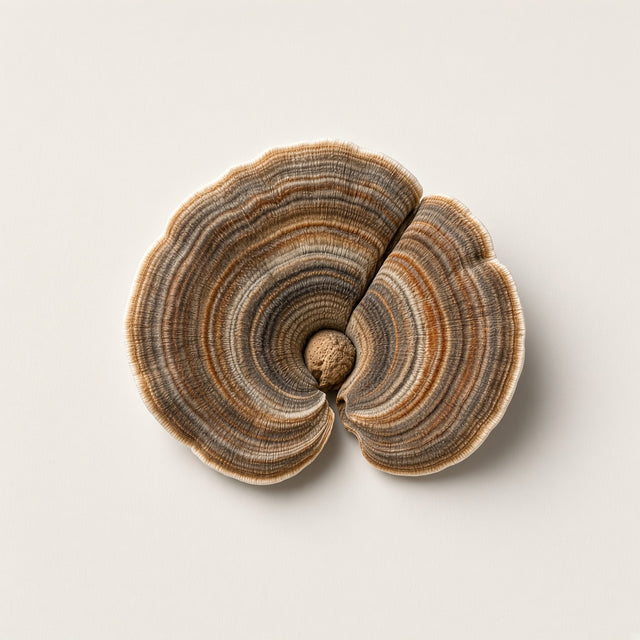
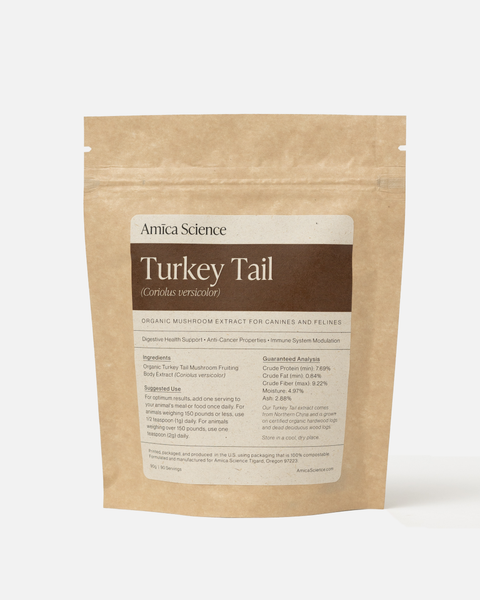
Turkey Tail
Trametes versicolor / Fruiting body
Human data onlyThe gut-and-immune classic, rich in polysaccharides.
What it supports- Supports a healthy immune response
- Supports a balanced gut microbiome
For cats: Start with a small pinch. Watch stool for the first two weeks.
Evidence and cautions
Evidence, honestlyHuman data only for everyday wellness. A small trial in healthy adults found a turkey tail polysaccharide shifted the gut microbiome. There are no everyday-wellness studies in healthy dogs or cats.
Cautions CEDRIC CHECK- Immune-suppressing medication: turkey tail is immune-active. Check with your vet if your animal takes immunosuppressive medication or has an autoimmune condition.
- Darker stool has been reported rarely in people. If you see black or tarry stool, call your vet; don't assume it's the mushroom.
- Safety in pregnancy and nursing is not established. Skip it for pregnant or nursing animals.
-
 04
04
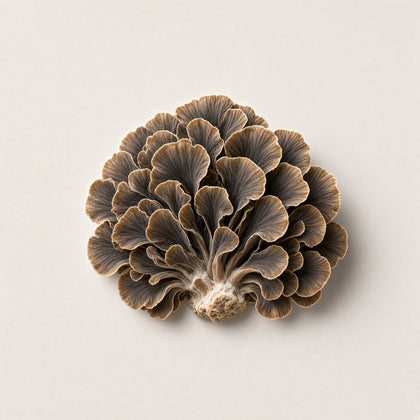
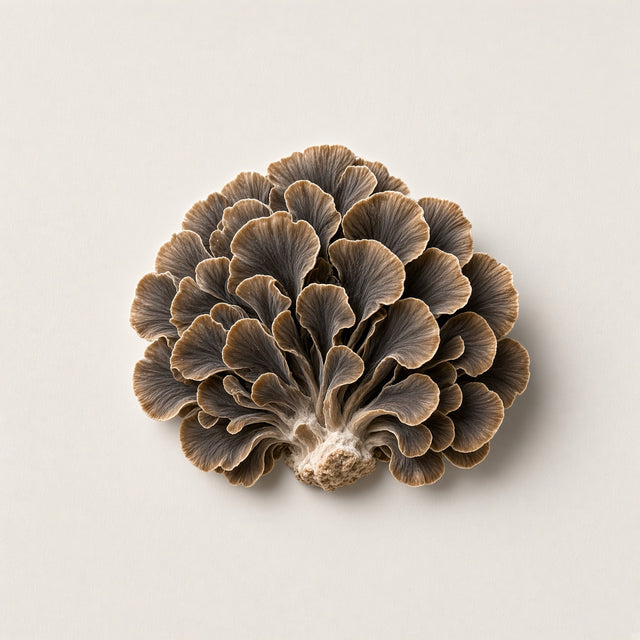
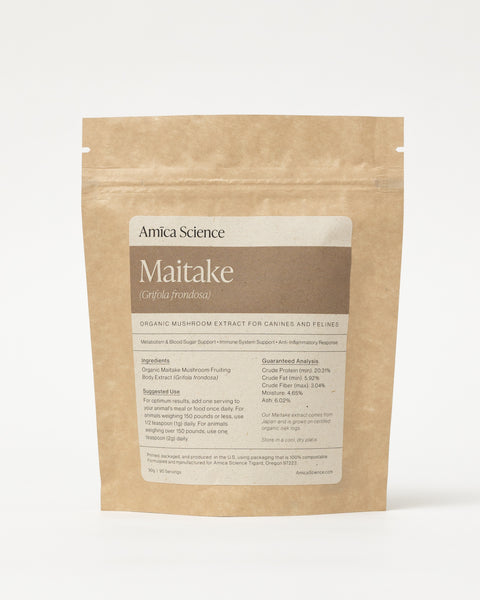
Maitake
Grifola frondosa / Fruiting body
Human and rodent researchThe "dancing mushroom," for everyday vitality.
What it supports- Supports a healthy immune response
- Supports everyday vitality
For cats: Cats on insulin should not have maitake unless your vet approves it. Start small and watch appetite.
Evidence and cautions
Evidence, honestlyHuman and rodent research only. There are no everyday-wellness studies of maitake in healthy dogs or cats.
Cautions CEDRIC CHECK- Blood sugar: maitake may lower blood sugar. Don't use it without your vet's OK if your animal takes insulin or any other blood-sugar medication.
- Blood thinners: a human case report linked maitake with a stronger blood-thinner effect. Check with your vet if your animal takes anticoagulant medication or has surgery coming up.
- Immune-suppressing medication: maitake is immune-active. Check with your vet if your animal takes immunosuppressive medication or has an autoimmune condition.
- Not studied in pregnant or nursing animals.
-
 05
05
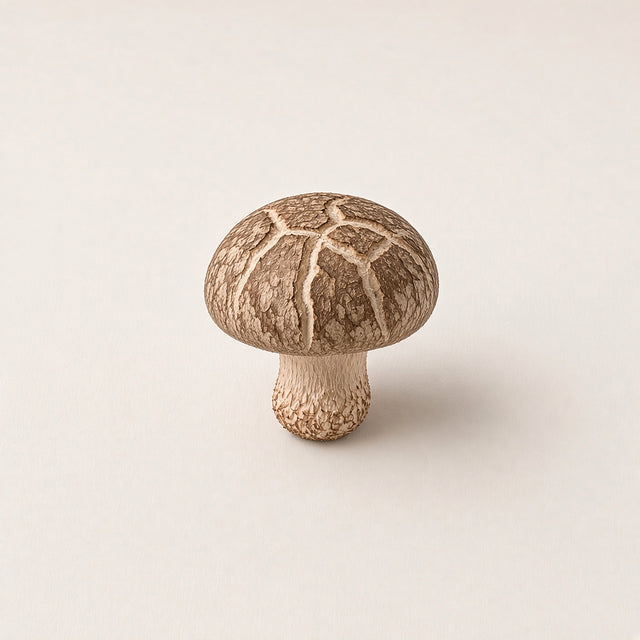
Shiitake
Lentinula edodes / Fruiting body
Dog data availableThe antioxidant mushroom, studied in dogs.
What it supports- Supports antioxidant defenses
- Supports a healthy immune response
For cats: Start with a small pinch. Watch for skin changes and stool changes.
Evidence and cautions
Evidence, honestlyDog data available. A 2024 study in healthy dogs found higher antioxidant markers after four weeks of shiitake powder. That study used much more shiitake than a typical topper serving, so we don't claim the same results. No published feline studies yet.
Cautions CEDRIC CHECK- Skin reactions: in people, raw or undercooked shiitake, and sometimes shiitake powder, can cause an itchy, streaky rash linked to its lentinan content. Stop and call your vet if your animal develops new itching or a rash.
- Never feed whole raw shiitake. Whole mushrooms can be hard to digest.
- Immune-suppressing medication: shiitake is immune-active. Check with your vet if your animal takes immunosuppressive medication or has an autoimmune condition.
- Not studied in pregnant or nursing animals.
-
 06
06
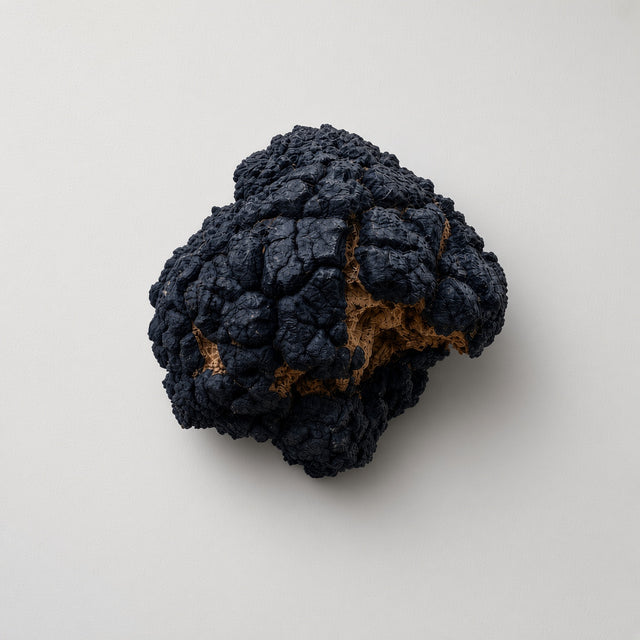
Chaga
Inonotus obliquus / Birch conk (sclerotium) CEDRIC CHECK
Lab, rodent and traditional useWild birch-grown chaga, rich in antioxidants.
What it supports- Supports antioxidant defenses
- Supports daily vitality
For cats: Calcium oxalate stones are common in cats, so we suggest choosing a different mushroom for most cats unless your vet says chaga is a good fit.
Evidence and cautions
Evidence, honestlyLaboratory and rodent research, plus traditional use. Chaga has the least animal research of our mushrooms. There are no controlled studies in dogs or cats.
Cautions CEDRIC CHECK- Kidneys and oxalates: chaga is naturally high in oxalates. Case reports in people describe kidney injury after taking large amounts for months. Skip chaga if your animal has a kidney condition or a history of calcium oxalate bladder or kidney stones. Keep servings small, and don't use it long term without your vet's advice.
- Blood thinners: chaga may increase the risk of bleeding. Check with your vet if your animal takes anticoagulant or antiplatelet medication or has surgery coming up.
- Blood sugar: chaga may lower blood sugar. Check with your vet if your animal takes insulin or other blood-sugar medication.
- Not studied in pregnant or nursing animals.
-
Tremella Snow mushroom
Tremella fuciformis / Fruiting body
Human data onlyThe "snow mushroom," for skin, coat and a sharp mind. Naturally rich in water-holding polysaccharides.
What it supports- Supports healthy skin and coat appearance
- Supports normal cognitive function
For cats: Start with a small pinch. Watch appetite and stool.
Evidence and cautions
Evidence, honestlyHuman data only. One controlled trial in adults looked at memory. The skin research is mostly topical cosmetics and lab studies. There are no studies of tremella in dogs or cats.
Cautions CEDRIC CHECK- Safety data in dogs and cats is lacking. Start with a small amount.
- Immune-suppressing medication: tremella polysaccharides are immune-active in lab studies. Check with your vet if your animal takes immunosuppressive medication or has an autoimmune condition.
- Not studied in pregnant or nursing animals.
-
Poria Fu Ling
Wolfiporia extensa / Sclerotium
Human and rodent researchThe settling mushroom, for digestive comfort and calm evenings.
What it supports- Traditionally used to support digestive comfort
- Helps maintain a relaxed evening rhythm
For cats: Start with a small pinch. Watch appetite, stool and litter-box habits.
Evidence and cautions
Evidence, honestlyHuman and rodent research only. One small human study looked at sleep quality, but it had no placebo group. Rodent studies have looked at gut health.
Cautions CEDRIC CHECK- Safety data in dogs and cats is lacking. Start with a small amount.
- Traditionally used for fluid balance. Check with your vet if your animal takes diuretics or has a kidney condition.
- Immune-suppressing medication: check with your vet if your animal takes immunosuppressive medication or has an autoimmune condition.
- Not studied in pregnant or nursing animals.
More mushrooms is not the same as better nourishment.
We'd rather your blend have one to four well-chosen mushrooms than a long list of everything.
Fewer mushrooms, clearer picture
With one or two mushrooms, it's much easier to see how your dog or cat responds: appetite, stool, energy and coat.
Introduce one at a time
Start with one mushroom, give it about one to two weeks, then add the next. If something doesn't agree with your animal, you'll know which one it was.
Serving and quality over count
Every mushroom you add shares the same daily serving. Four mushrooms means less of each. Pick for a purpose, not for a number.
Grown on wood, no grain fillers
Our extracts are made from organic mushrooms grown on wood, with no grain fillers. Mushroom powders grown on grain can carry a lot of starch from the grain itself.
| Mushrooms in the scoop | Each one gets | Share |
|---|---|---|
| 1 our suggestion | 1,000 mg | |
| 2 our suggestion | 500 mg | |
| 4 builder limit | 250 mg | |
| 12 kitchen sink | 83 mg |
Arithmetic on the 1 g (1/2 teaspoon) label serving of our singles, for illustration. Not a serving instruction.
Check with your vet first if your dog or cat takes any medication, has a health condition, is pregnant or nursing, or has surgery coming up.
Build around one goal, then round it out.
Different mushrooms bring different compounds. A well-chosen second pick can round out one goal without crowding the serving.
- 01
Pick a goal
Choose one main reason for the blend. The ideas here are a starting point.
- 02
Start with 1 or 2
You can always add more later. The builder caps every blend at 4.
- 03
One at a time
Add one new mushroom, wait about one to two weeks, then add the next.
- 04
Watch and note
Keep an eye on appetite, stool, energy, skin and coat. Stop the newest mushroom if anything changes for the worse.
- 05
Check with your vet
Especially if your dog or cat takes medication or has a health condition.
| Goal | Start with | Add later (optional) |
|---|---|---|
| Focus and cognition | Lion's Mane | Reishi; Tremella when available |
| Seasonal and immune support | Reishi | Turkey Tail, then Shiitake or Maitake |
| Digestion and gut balance | Turkey Tail | Shiitake; Poria when available |
| Energy and active days | Shiitake | Reishi |
| Antioxidant support and healthy aging | Shiitake | Reishi, Lion's Mane |
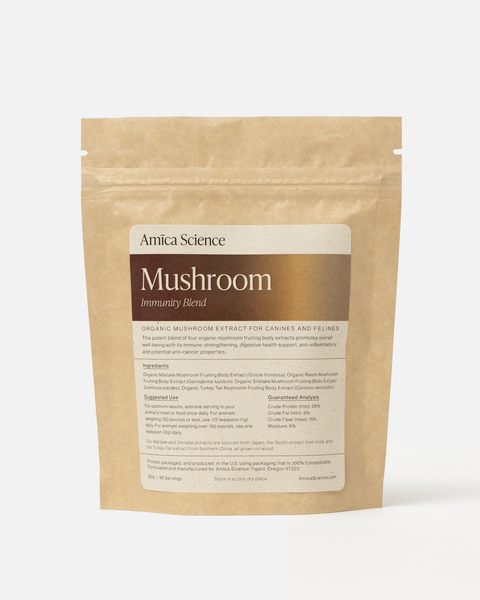
Want all four classic immune mushrooms in one scoop? Our Immunity Blend combines Reishi, Turkey Tail, Shiitake and Maitake.
For joint comfort and mobility, our wild salmon line with marine omega-3s (EPA and DHA) has stronger research behind it than any mushroom.
- Reishi, Maitake and Chaga may each affect bleeding. If your animal takes a blood thinner or has surgery coming up, talk to your vet before using any of them, and don't combine them without your vet's OK.
- Maitake and Chaga may each lower blood sugar. Animals on insulin or other blood-sugar medication need a vet's OK first.
- Every mushroom here interacts with the immune system. Animals on immunosuppressive medication or with an autoimmune condition need a vet's OK first.
Dogs and cats are not the same.
Cats are smaller and often more sensitive to new foods than dogs, and there is very little mushroom research in cats.
- Start lower. Begin with a small pinch and build gradually over one to two weeks.
- Keep it simple. One or two mushrooms is plenty for most cats.
- Part of a complete diet. Mushrooms are an addition to a complete and balanced cat food, never a replacement.
- Watch appetite and stool. If your cat eats less, skips a meal, or has loose stool, stop the newest mushroom and call your vet. A cat that stops eating for more than a day needs a vet promptly.
- Keep extras small. Toppers, chews and other extras should stay under about 10% of your cat's daily calories.
- Skip chaga for most cats, and ask your vet before using maitake if your cat takes insulin.
- Reishi is our best-researched mushroom for dogs, with a 2024 controlled study in healthy adult Beagles.
- Shiitake has been studied in healthy dogs for antioxidant markers.
- Lion's Mane is a gentle addition for senior dogs and for dogs in training.
- Same rules apply: start with 1 or 2, introduce one at a time, and watch appetite, stool, energy, skin and coat.
Know exactly what goes in.
Organic mushroom extracts, grown on wood, with no grain fillers. Origins as listed on each product page, with the evidence level for each, stated honestly.
| Mushroom | Part | Origin | Evidence | What it supports | Link |
|---|---|---|---|---|---|
| Lion's ManeHericium erinaceus | Fruiting body | Scotland, organic oak and maple logs | Human and lab research | Supports normal cognitive function and mental alertness; Traditionally prized for focus and nerve wellness | Shop Lion's Mane |
| ReishiGanoderma lucidum | Fruiting body | India, organic dunwood logs | Dog data available | Supports a healthy immune response; Supports daily wellness | Shop Reishi |
| Turkey TailTrametes versicolor | Fruiting body | Northern China, organic hardwood logs | Human data only | Supports a healthy immune response; Supports a balanced gut microbiome | Shop Turkey Tail |
| MaitakeGrifola frondosa | Fruiting body | Japan, organic oak logs | Human and rodent research | Supports a healthy immune response; Supports everyday vitality | Shop Maitake |
| ShiitakeLentinula edodes | Fruiting body | Japan, organic beech logs | Dog data available | Supports antioxidant defenses; Supports a healthy immune response | Shop Shiitake |
| ChagaInonotus obliquus | Birch conk (sclerotium) CEDRIC CHECK | Alaska, birch | Lab, rodent and traditional use | Supports antioxidant defenses; Supports daily vitality | Shop Chaga |
| TremellaTremella fuciformis | Fruiting body | To be announced | Human data only | Supports healthy skin and coat appearance; Supports normal cognitive function | Coming soon |
| PoriaWolfiporia extensa | Sclerotium | To be announced | Human and rodent research | Traditionally used to support digestive comfort; Helps maintain a relaxed evening rhythm | Coming soon |
Start with one. Add from there.
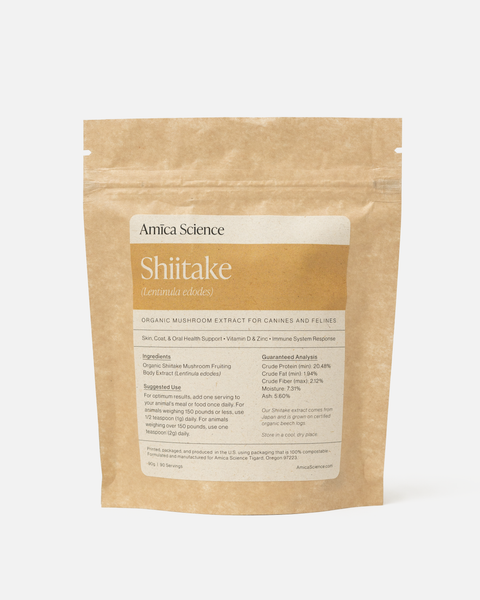
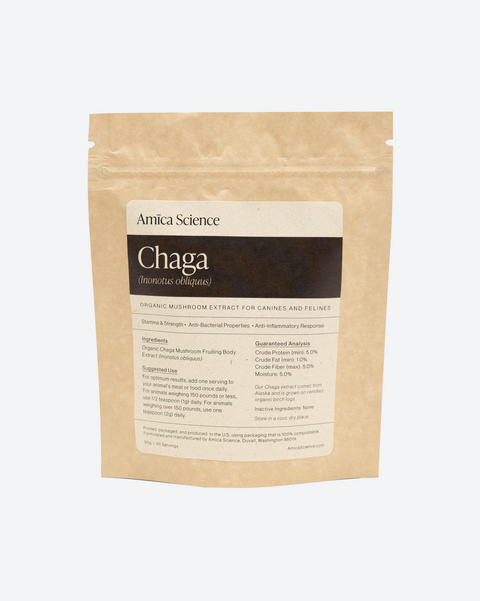
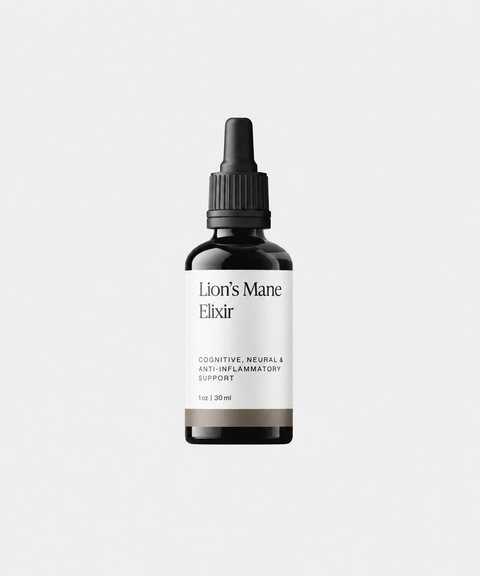
Every mushroom available in the builder is sold on its own, plus our ready-made Immunity Blend and Lion's Mane Elixir.
Vet first, always.
This page is for education, not veterinary advice. Our mushrooms are foods that support everyday wellness; they are not medicines. Talk with your veterinarian before adding any new food, especially if your dog or cat takes medication, has a health condition, is pregnant or nursing, or has surgery planned.
- Follow the serving guide on your blend label. Your blend shares one daily serving across your picks. CEDRIC CHECK
- Intended for intermittent or supplemental feeding. Not a complete diet.
- Never let your dog or cat eat wild mushrooms. Some wild species are seriously toxic, and dogs are especially at risk. If you think your animal ate a wild mushroom, call your vet or an animal poison control line right away.
Sources We list the research behind this page so you can read it yourself.
- Kayser et al. 2024, Journal of Animal Science. Reishi in healthy adult Beagles (PMID 38417056).
- Kusaba et al. 2024, Frontiers in Veterinary Science. Shiitake powder and antioxidant markers in healthy dogs (DOI 10.3389/fvets.2024.1355560).
- Pallav et al. 2014, Gut Microbes. Turkey tail polysaccharide and the gut microbiome in healthy adults (PMID 25006989).
- Mori et al. 2009, Phytotherapy Research. Lion's mane and memory in older adults (PMID 18844328).
- Chen et al. 2022, Current Research in Toxicology. 90-day lion's mane extract safety study in rats (PMID 35341120).
- Ban et al. 2018, Journal of Medicinal Food. Tremella and memory in adults (PMID 29319408).
- Kim et al. 2023, Nutrients. Poria extract and sleep quality in adults (PMID 37836526).
- Kikuchi et al. 2014, Clinical Nephrology; Lee et al. 2020, Journal of Korean Medical Science; Kwon et al. 2022, Medicine. Case reports of kidney injury linked to long-term chaga intake in people (PMIDs 23149251, 32419395, 35451393).
- Memorial Sloan Kettering "About Herbs" database: entries for reishi, maitake, chaga, shiitake and turkey tail (coriolus) (side effects and medication interactions).
- NIH LiverTox (National Library of Medicine): Lingzhi / Reishi.
- Merck Veterinary Manual: Overview of Mushrooms Toxic to Animals; Urolithiasis in Cats; Urolithiasis in Dogs.
- WSAVA Global Nutrition Committee: Global Nutrition Guidelines and owner guide on feeding extras (keep extras under about 10% of daily calories).
How does Build your blend work?
Pick your animal, then choose one to four of our organic mushrooms, or start from a goal. The panel shows what your blend supports and flags anything to check with your vet. Then choose a 1 month or 3 month supply and add it to your cart. Every blend is made to order.
How many mushrooms should I choose?
Our suggestion is to start with 1 or 2. The builder caps every blend at 4. Every mushroom you add shares the same daily serving, so four mushrooms means less of each. Pick for a purpose, not for a number.
How do I introduce a new mushroom?
Start with one mushroom, give it about one to two weeks, then add the next. Keep an eye on appetite, stool, energy, skin and coat, and stop the newest mushroom if anything changes for the worse.
Can I order my custom blend?
Yes. Choose 1 to 4 mushrooms, then pick 1 month (30 g) for $29.99 or 3 months (90 g) for $79.99. Each blend is made to order. Every mushroom is also sold as a single, from $22.99 for a 30 g jar.
How much do I give?
Follow the serving guide on your blend label. Your blend shares one daily serving across your picks. Our mushrooms are intended for intermittent or supplemental feeding and are not a complete diet. CEDRIC CHECK
Is this for cats too?
Yes. Cats are smaller and often more sensitive to new foods than dogs, and there is very little mushroom research in cats. Start lower, keep it to one or two mushrooms, skip chaga for most cats, and ask your vet before using maitake if your cat takes insulin. CEDRIC CHECK
Can I combine mushrooms if my animal takes medication?
Talk to your vet first. Reishi, Maitake and Chaga may each affect bleeding, Maitake and Chaga may each lower blood sugar, and every mushroom here interacts with the immune system. CEDRIC CHECK
When will Tremella and Poria be available?
They are coming soon. Tap Get notified on either card and we will email you when they arrive.
What if my dog or cat eats a wild mushroom?
Never let your dog or cat eat wild mushrooms. Some wild species are seriously toxic, and dogs are especially at risk. If you think your animal ate a wild mushroom, call your vet or an animal poison control line right away.